Start with the pages your customers already find
To grow your SEO in October 2026, start with the pages that can bring the right customer to your business. A bigger publishing schedule is useful only when it answers questions your existing site leaves unanswered. List the services you sell and the customer decision each important page supports.
Search Console helps you grow your SEO from observed search demand. Look at queries and landing pages together, over complete comparable periods. Separate branded searches from people discovering you for the first time, then identify pages receiving relevant impressions without useful clicks.
Before you grow your SEO with new content, check whether Google can access the existing pages. A broken canonical, accidental noindex instruction or inaccessible navigation can undermine good writing. Repair a fault shared by many valuable pages before polishing one low-priority article.
Choose work that changes the answer
A useful way to grow your SEO is to improve the answer on a page already close to what customers need. Explain the actual service, who it suits, what the enquiry requires and how somebody takes the next step. Add genuine examples rather than another generic definition.
Internal links help you grow your SEO by connecting supporting explanations to their relevant commercial destination. A guide should help readers understand the subject and find the service when they need implementation. At VyrexCode, that connection belongs in the paragraph where the next step becomes useful.
You can also grow your SEO by making important pages easier to use. Test the enquiry form on a phone, check that pricing explanations are readable and remove unnecessary steps between the answer and the action. Search visibility has little business value when visitors cannot finish the journey.
Plan the next month around evidence
To grow your SEO sustainably, give each new topic a clear job. Review existing articles and drafts before assigning another title. A definition, a buying guide and a troubleshooting page can coexist when they answer different questions; three versions of the same sales pitch add little.
Relevant editorial coverage can help you grow your SEO when another site has a real reason to reference your work. Useful research, an original resource or a helpful industry contribution gives publishers something to cite. Buying a large volume of links is not a substitute for making the destination worth visiting.
Measure whether you grow your SEO through qualified visits and meaningful enquiries, as well as clicks. VyrexCode connects page changes with search performance and landing-page conversion evidence where the relevant analytics access is available. A date correlation can guide investigation without proving that one edit caused every movement.
If you want help to grow your SEO, use a scoped plan with named pages, a delivery order and a review date. VyrexCode offers managed SEO services for the technical work, content and reporting behind that plan. Bring the current website and the service you want more customers to find.
A practical October work list
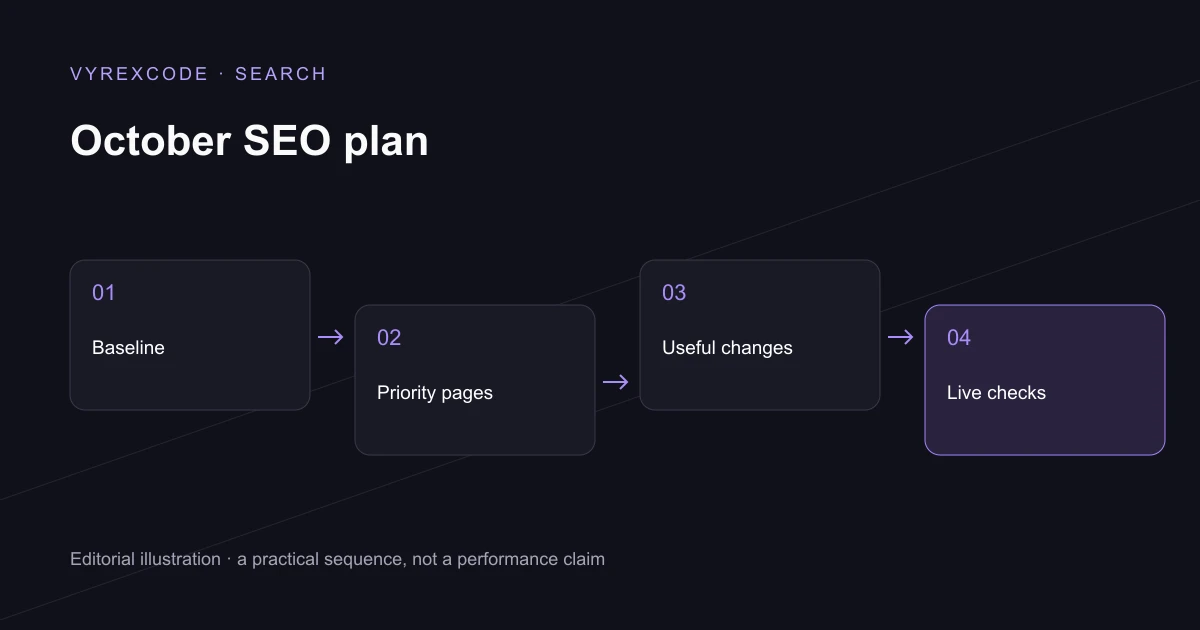
First, record the current baseline and choose one commercial journey to improve. Second, fix access problems affecting that journey. Third, improve the page and its supporting links. Finally, verify the live change and compare the same measures after enough settled data has accumulated.
Keep a change log with the URL, date and purpose of each release. Record seasonal demand, campaigns and site outages alongside it. Those details make a later performance discussion much more useful than a chart with no explanation of what happened.
Put the advice into practice
For a service business, choose one priority service and inspect the questions customers ask before booking. A clear explanation of the visit, deliverable or enquiry requirements gives the content plan a concrete starting point.
For an established store, review product and category journeys separately. A catalogue problem and an unclear delivery policy can affect different stages of the purchase, so assign each fix to the correct owner.
Use the technical audit checklist when the first obstacle is access or page processing. It provides a separate inspection task rather than another version of the monthly growth plan.
Agree a review date and the evidence needed before the next decision. Keep unfinished tasks visible, and distinguish a development dependency from a content problem so the team can act on the actual constraint.