Look for a mismatch between work and value
Bad SEO is work that fails to help the website's real audience, creates avoidable search problems or misrepresents what has been achieved. A disappointing month alone does not prove poor practice. Start with the actual changes and the evidence behind the supplier's explanation.
One sign of bad SEO is publishing several pages that answer the same question with minor keyword changes. Open the articles and compare their useful substance. A different location or headline does not automatically create a distinct service or a new reader need.
Forced repetition can reveal bad SEO when the page becomes difficult to read. Keywords should describe the subject naturally. A supplier should be able to explain why each section exists beyond reaching a word count or repeating a phrase a prescribed number of times.
Inspect the public result
Technical bad SEO can include accidental noindex instructions, broken canonical signals and important pages removed without a suitable replacement. Ask whether the issue affects one URL or a shared template. A screenshot of a warning is less useful than the live fault and a verified repair.
Misleading titles and unsupported promises are another form of bad SEO. The page should deliver the answer its search listing suggests. At VyrexCode, service features, prices and performance claims need evidence from the correct business rather than recycled examples from another client.
Link reports can hide bad SEO when they show a large count without the actual placements. Request the publisher URLs, destinations and link treatment. A third-party authority score does not prove that a link is relevant, genuine or compliant with search policies.
Check how the supplier reports
Bad SEO reporting can confuse impressions with visits or visits with sales. Ask for the definition, source and date range of each important measure. A property total and a selected query table may answer different questions, so they should not be casually added together.
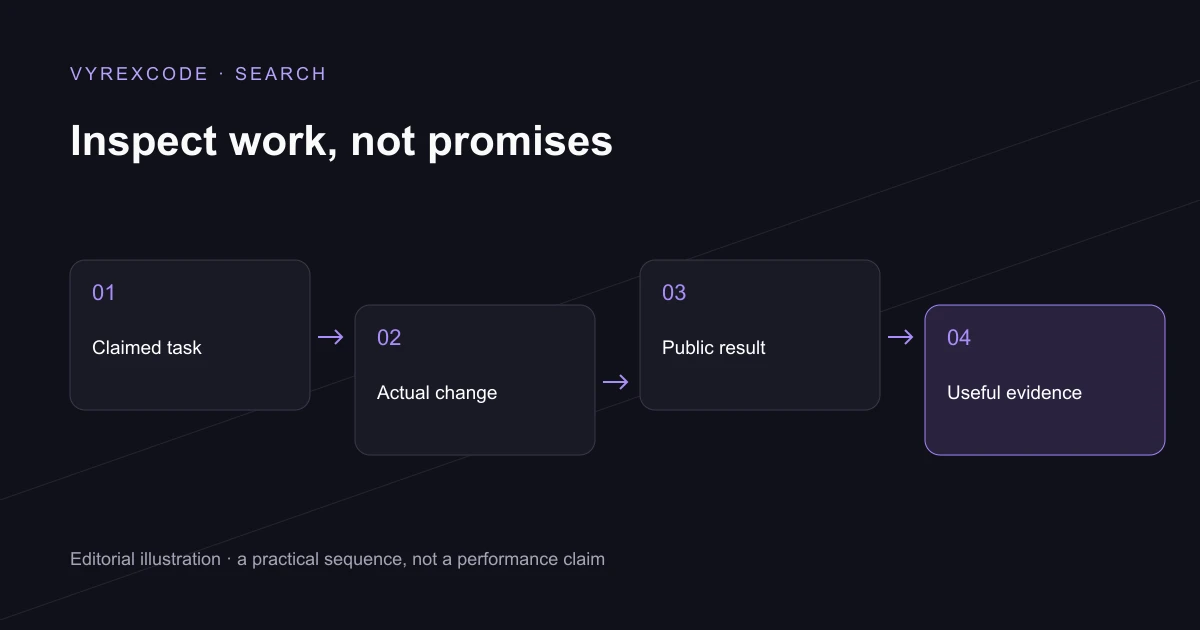
A supplier defending bad SEO may rely on vague activity statements rather than completed work. Ask to see a recent change, its purpose and the live result. VyrexCode records the implementation so a review can distinguish an idea, a saved draft and a verified publication.
To investigate possible bad SEO fairly, consider demand, seasonality and technical changes alongside the supplier's work. A small sample or a single lost query can exaggerate the picture. Keep the criticism tied to observable decisions rather than assuming every decline proves misconduct.
If you suspect bad SEO on your site, VyrexCode can review the pages and evidence through our managed SEO services. Bring the current reports and completed-work list. The aim is to identify what needs repairing and what useful work should happen next.
Keep the review practical
Retain ownership of the domain, search property and analytics accounts so that you can inspect the evidence yourself. Use normal access permissions for suppliers and keep the agreed scope in writing. Clear ownership makes both cooperation and handover easier.
Choose the most consequential verified problem first. Repairing a fault affecting the main enquiry pages can matter more than correcting every low-priority warning in a long audit. Record the fix and check the same customer journey afterwards.
Put the advice into practice
Inspect a recent content assignment and ask which reader question it adds to the existing library. If the answer is only a spelling or location variation, compare the actual page substance before approving more of the same.
Inspect a recent technical task and ask whether the public result was checked. The deployment record and live behaviour matter more than a message saying the developer finished the change.
Use the agency audit guide when you need a fuller evidence review. It provides a separate process for reconciling work, reports and delivery records.
Keep the review proportionate to what the evidence establishes. A verified broken journey warrants a repair; a weak monthly result warrants investigation. Neither is a reason to invent a cause or accuse a supplier without support.