Judge the work before the chart
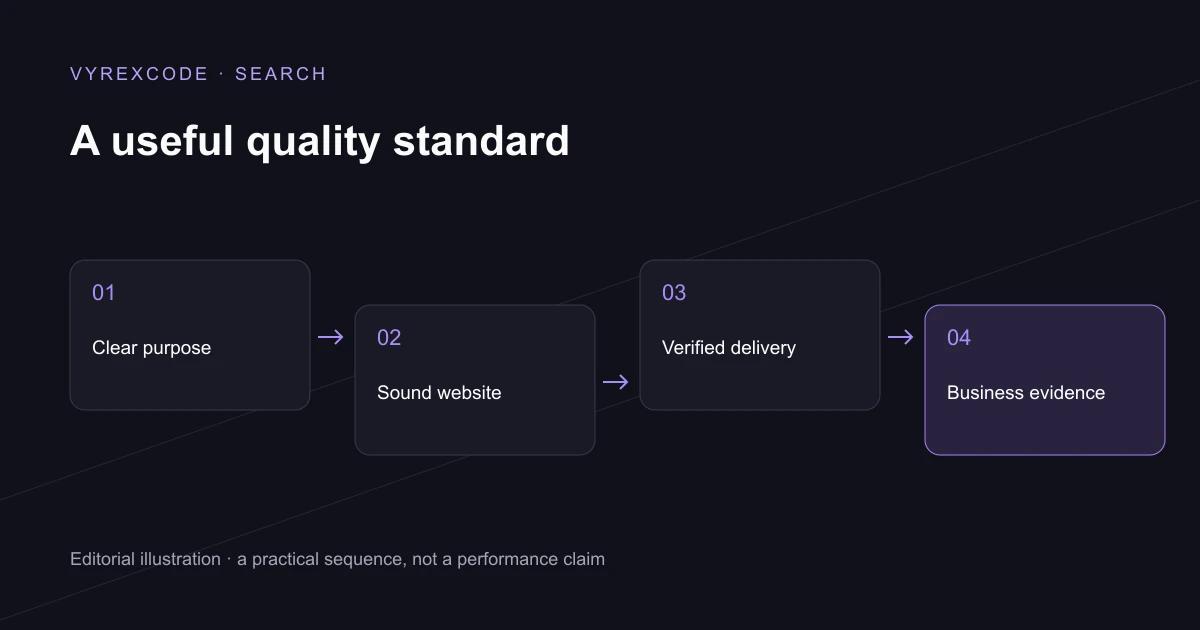
Good SEO makes a website easier to find, understand and use for the people the business can actually help. It combines useful answers with a sound technical foundation. Traffic from unrelated searches is a weak success measure if those visitors have no reason to become customers.
A good SEO plan names the pages that need attention and explains why. The supplier should connect each task to a reader problem, an access fault or an opportunity seen in search data. A list of activities without priorities makes it difficult to judge whether the work matters.
Good SEO respects the site's existing topic ownership. One page can explain a service while another answers a specific supporting question. VyrexCode checks the current library before creating articles so that new content adds a useful answer rather than competing with an existing one.
Look for useful changes
You can recognise good SEO in page copy that answers practical questions plainly. A visitor should understand what is offered, who it suits and what happens next. Original examples and accurate service details are stronger evidence of care than decorative sections repeating the same promise.
Technical checks are part of good SEO when they lead to fixes. A report showing errors is a starting point. Ask which issues affect valuable pages, what changed and whether the live result was checked after the release.
Good SEO also makes internal navigation useful. Links should take readers to the page that answers their next question, with anchor text that describes the destination. An article about improving search performance can naturally introduce managed SEO services when the reader needs somebody to deliver the work.
Demand honest evidence
Reporting for good SEO separates what was done from what happened afterwards. A change ledger identifies the work; Search Console shows search performance. Analytics and order records help examine customer actions. Those sources answer different questions and should retain their own dates and definitions.
Good SEO does not require a supplier to pretend every movement came from their latest edit. Demand changes, competitors and search systems also affect results. VyrexCode uses before-and-after evidence to investigate performance while keeping those limits clear.
A sensible link strategy belongs within good SEO when it earns relevant references and respects search-engine policies. Claims that every high-authority link is safe or that a paid link guarantees ranking credit deserve scrutiny. Look at the actual publisher, page and link treatment.
The commercial test for good SEO is whether the work helps bring suitable customers towards a useful action. VyrexCode can scope the technical improvements, content and measurement around that journey. Bring the current site and a clear explanation of the enquiries or sales you want to grow.
Use a short quality review
Choose a recent completed task and inspect it yourself. Open the page on a phone, follow the links and submit a test enquiry through the agreed route. Ask to see the original problem, the live fix and the acceptance evidence.
A strong supplier can explain both progress and unresolved problems in ordinary language. They should make it easier for you to understand the website, rather than using unexplained scores to discourage questions.
Put the advice into practice
For a service page, ask whether a first-time visitor understands what the business does before reaching the enquiry form. An attractive layout cannot compensate for missing scope or a next step that makes no sense.
For a content guide, ask what a reader can understand or do after reading it. A distinct answer, relevant example and clear progression give the page a purpose beyond increasing the article count.
The separate agency audit guide explains how to examine the supplier's records. Use it when you need to test completed delivery rather than define the quality standard.
Keep a short acceptance record for important releases. Include the original problem, affected page and observed result so a later review can assess the improvement without reconstructing the project from messages.