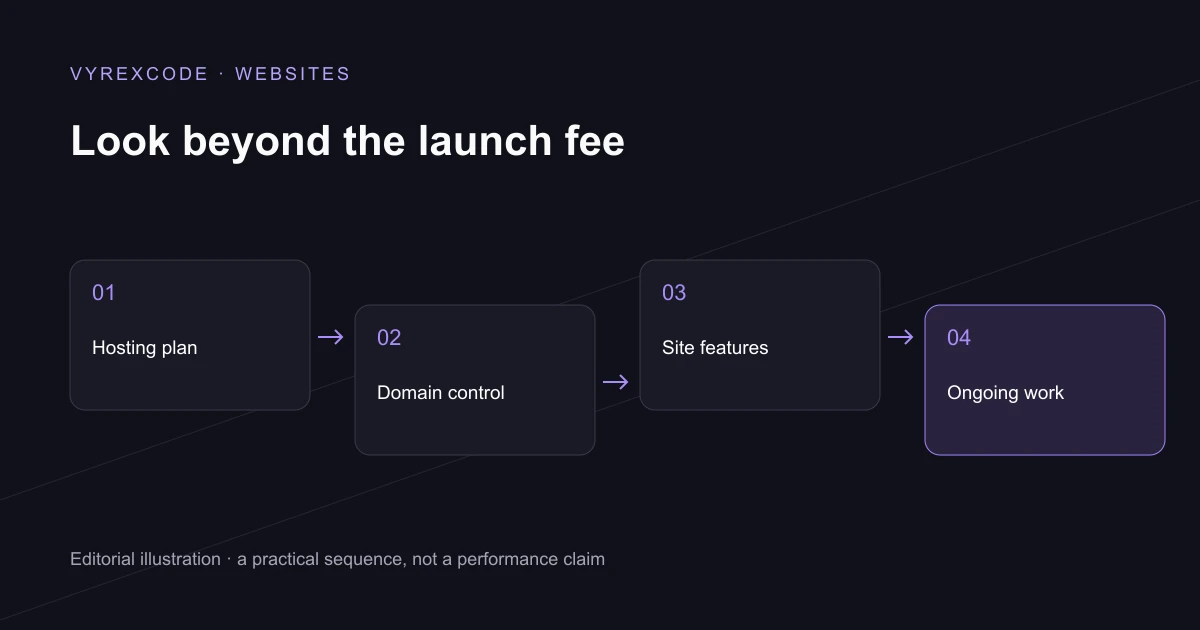
Yes, a site can have no upfront hosting charge
Free websites exist, and they can be useful for learning, a personal project or a simple information page. Some providers let you publish on their subdomain without paying a hosting fee. That is different from saying every requirement of a business website can be met at no cost.
When comparing free websites, check the current plan conditions rather than assuming all providers offer the same thing. Custom domains, storage, forms and ecommerce can have different limits. A feature available during a trial may require payment after the trial ends.
Static hosting can support free websites containing pages, images and browser-side code. GitHub Pages is one example of a service publishing static content, subject to its current usage rules. A static host does not itself supply a complete order-processing or customer-management system.
Separate the platform fee from the work
Free websites still require somebody to plan and create the content. You need clear pages, suitable images, useful navigation and an accurate way to contact the business. A provider removing its monthly fee does not remove that effort.
The trade-off with free websites may include a provider subdomain, branding or limited control over the site. Check the actual agreement and export options. At VyrexCode, we encourage businesses to understand domain and content ownership before committing to a platform.
For free websites handling enquiries, inspect where form submissions go and what happens if delivery fails. A form that looks finished can still lose a customer. Confirm the storage, notification and privacy arrangements before relying on it for business.
Decide when paying is worthwhile
Free websites can be a sensible first step when the requirement is small and you have time to maintain them. Test the limitations against the job rather than dismissing the option automatically. A straightforward informational site does not always need a bespoke application.
Free websites become less suitable when the business needs a custom journey, integrations or operational support that the plan does not supply. Paying for implementation can then be about fit and responsibility, rather than simply removing a logo from the footer.
Moving beyond free websites should follow a clear business need. VyrexCode can assess what is missing and whether a simpler paid setup or a custom build is appropriate. There is little value in buying complexity the business will not use.
If the limits of free websites are costing you time or customer enquiries, bring the current site to VyrexCode. Our custom website development service can cover the content structure, customer journey and connected systems you need. VyrexCode will scope those requirements before recommending the build.
Questions to check before you publish
Can you use the domain you want, export your content and connect the required forms? Who owns the account, and what happens if the provider changes the plan? Those questions make the real cost easier to understand.
Keep a copy of the content and record any recurring charges, renewals and usage limits. A zero-cost launch can be perfectly legitimate, but it should remain an informed choice rather than an assumption that the site will never need time or money.
Put the advice into practice
For a simple project, free websites may be enough to publish useful information while you learn what customers need. Confirm that the provider's current usage conditions permit the intended purpose.
For a company relying on enquiries, free websites need the same practical journey check as a paid site. Send an agreed test message and verify the team receives it through the intended process.
Read the builder comparison when the decision is about platform fit. The distinction here is cost and limitations, rather than a claim that every business needs custom software.
Plan a possible move before a small project becomes operationally important. Keeping the domain and content under business control makes a later migration easier to evaluate.