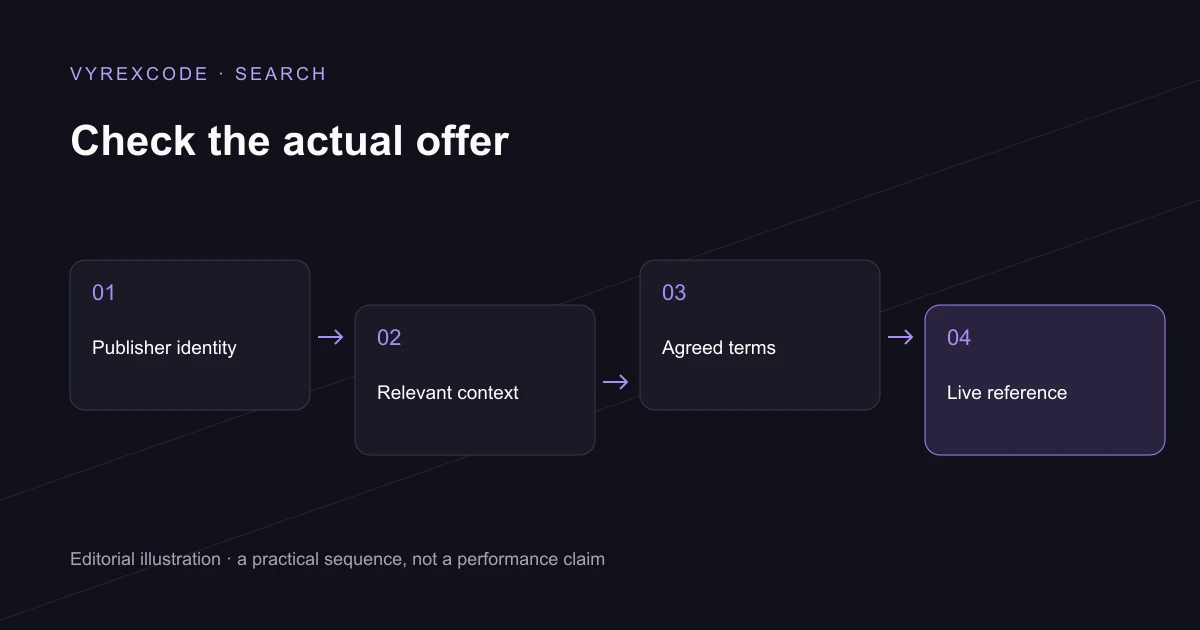
Ask what is actually being sold
Backlink scams often begin with an impressive metric and very little information about the actual placement. Ask for the publisher, proposed page type, destination and terms. If those details remain vague until after payment, you cannot assess whether the offer serves your audience.
A common feature of backlink scams is a claim that a link guarantees a ranking or a specific increase in traffic. No seller controls Google's organic results in that way. Separate a contractual promise to publish a reference from an outcome they cannot guarantee.
Spoofed authority can make backlink scams look credible. Third-party metrics may reflect redirects, old site history or data that does not describe the proposed article. Open the current website, inspect recent content and check whether it serves a recognisable audience.
Verify the publisher and placement
To investigate backlink scams, check whether the person selling access has a credible connection to the publisher. Use the publisher's own contact route where appropriate. A logo in a spreadsheet or a screenshot of an email does not independently establish that relationship.
Backlink scams can also involve lookalike domains. Read the full hostname rather than relying on a familiar-looking brand in the page design. Confirm that the exact proposed URL belongs to the publisher you intended to buy from.
A useful way to avoid backlink scams is to assess the article as a reader would. Does it explain something relevant, fit the host's subject and link where the reference helps? VyrexCode considers that context rather than accepting a placement because it carries a high score.
Understand payment and policy
Not every poor placement is one of the deliberate backlink scams. A genuine publisher can still offer an unsuitable page or terms that do not fit your objectives. Record exactly what was agreed so that quality disputes are separated from false claims about what was sold.
Promises of secret paid links with guaranteed ranking credit belong among the warning signs around backlink scams. Google requires paid placements to use suitable link qualification, normally sponsored or acceptable nofollow attributes. A genuine commercial relationship does not remove that policy requirement.
After publication, check for backlink scams by inspecting the public page and actual link. Confirm the destination, anchor, treatment and accessibility. VyrexCode keeps the verified placement separate from a seller's delivery message, because a receipt does not prove the article exists as agreed.
If you want a second opinion on an offer or help avoiding backlink scams, bring the publisher details to VyrexCode. Our managed SEO services can review link activity alongside the destination's content and technical needs. There may be more useful work to prioritise before buying a placement.
Keep evidence that survives a sales conversation
Save the agreed page, placement date, renewal terms and any removal or refund conditions. Retain a dated observation of the delivered link. Avoid sharing unnecessary credentials or making decisions from a cropped dashboard image alone.
A placement is easier to judge when there is a clear reason for it beyond ranking hopes. A relevant audience, a helpful resource and a genuine editorial connection give the purchase a concrete purpose you can inspect.
Put the advice into practice
A seller's sample placement can be useful, but check whether the proposed purchase uses the same publisher and conditions. A strong example elsewhere does not prove that your own article will receive comparable treatment.
Be wary of evidence that cannot be independently inspected. A cropped traffic chart or an unnamed publisher leaves out the context needed to evaluate the actual opportunity.
Read the backlink priority guide before committing a budget. A genuine offer can still be a poor purchase when the destination page or customer journey needs more urgent work.
If the delivered article differs from the agreement, document the exact discrepancy and use the agreed resolution process. Keep claims tied to the observable page and terms rather than treating every disappointing outcome as deliberate fraud.