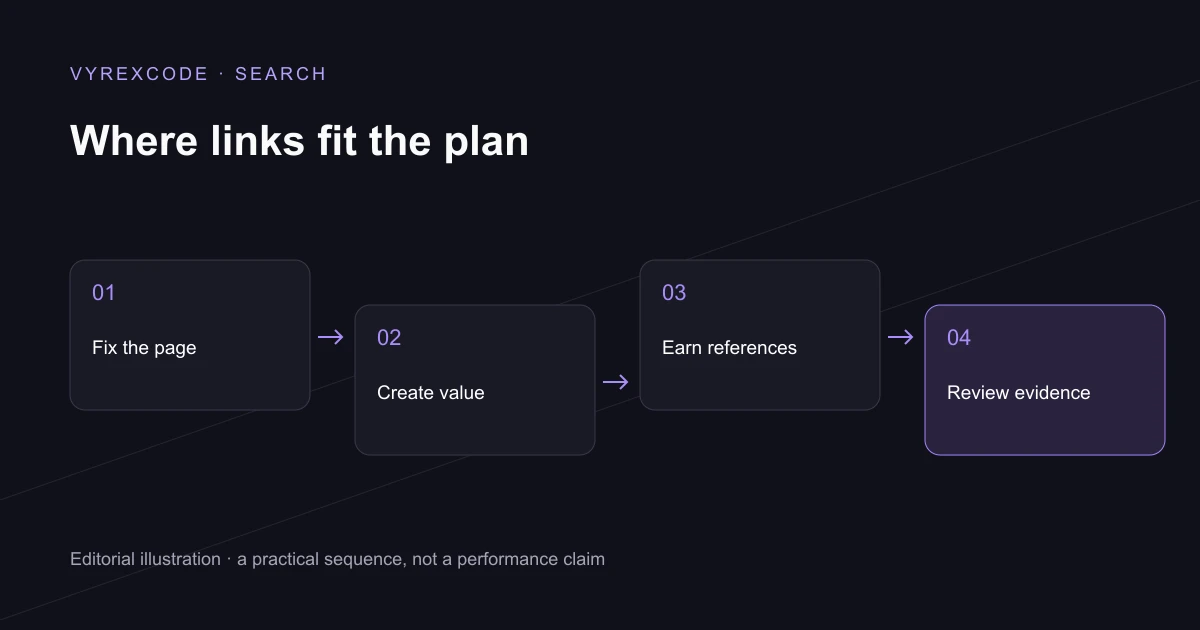
Decide what is holding the site back
SEO backlinks are worth prioritising when useful pages need relevant references and wider discovery. They are a weaker first priority when the site has inaccessible pages, unclear service copy or a broken checkout. Start by identifying the problem a link would actually help solve.
Before investing in SEO backlinks, inspect the destination. Does it give a publisher's audience a useful answer, original resource or credible service explanation? A reference to a thin page is less helpful to the reader, regardless of the metrics displayed in a seller's spreadsheet.
SEO backlinks should fit a wider plan for the business. A relevant industry mention can bring referral visitors as well as search discovery. That direct audience value gives you a reason to pursue the reference without assuming every link will improve a ranking.
Give publishers something worth referencing
The strongest starting point for SEO backlinks is often an asset somebody has a reason to cite. Examples include a clear technical explanation, original research with a stated method or a practical resource. Ordinary advice rewritten into another list rarely creates a compelling editorial reason to link.
Relevant partnerships can lead to SEO backlinks where the connection is real and useful to the reader. A supplier, association or project write-up may have a legitimate reason to mention the business. VyrexCode looks at the actual relationship and page, rather than treating a domain score as a complete assessment.
Prioritise SEO backlinks to the page that best serves the reference. A detailed resource may be the right destination for a technical explanation; a service page may suit a supplier recommendation. Keep the chosen landing page useful and connect it to the rest of the site through sensible internal navigation.
Understand the buying risk
Paid SEO backlinks need the appropriate link qualification under Google's policies, usually rel='sponsored' or an acceptable nofollow treatment. Paying for a placement does not buy guaranteed ranking credit. A seller promising otherwise is making a claim the purchase cannot establish.
Review SEO backlinks by opening the actual page and inspecting its context. Check whether the publisher is real, whether the article is readable and whether the link goes to the agreed destination. Domain authority metrics are third-party measures rather than a Google endorsement.
Measure SEO backlinks through the evidence available: a live placement, its treatment, referral visits and relevant changes over time. VyrexCode keeps that separate from unsupported claims that one new link caused a traffic increase. Several changes and outside factors may overlap.
If you are unsure whether SEO backlinks should be your next investment, VyrexCode can review the destination pages and current campaign through our managed SEO services. Spend should follow a useful priority, with the actual placements and limitations visible.
Keep a placement record
Save the publisher URL, destination, anchor, placement date and agreed terms. Record the attributes you verified on the public link and retain a dated observation if the publisher later changes it. A purchase receipt alone is not evidence that the reference is live.
Check important references again after a suitable interval. Pages can disappear, links can change and a publisher can move the article. Maintenance matters because a previously verified placement is not a permanent guarantee of its current state.
Put the advice into practice
For a new service page, SEO backlinks may be premature if the offer is still unclear. Improve the destination first so a publisher's reference sends readers to a page that answers the reason they followed it.
For an original industry resource, SEO backlinks can become a more relevant priority once the explanation and methodology are ready. The outreach should show why the resource helps that publisher's audience.
Read the backlink definition for link direction and attributes. This page focuses on campaign priority, so the two guides serve different points in the reader's decision.
When comparing opportunities, record the audience fit and the specific destination before the cost. That keeps the placement decision connected to a useful reference instead of a ranking metric the seller cannot guarantee.