There is more than one calculation
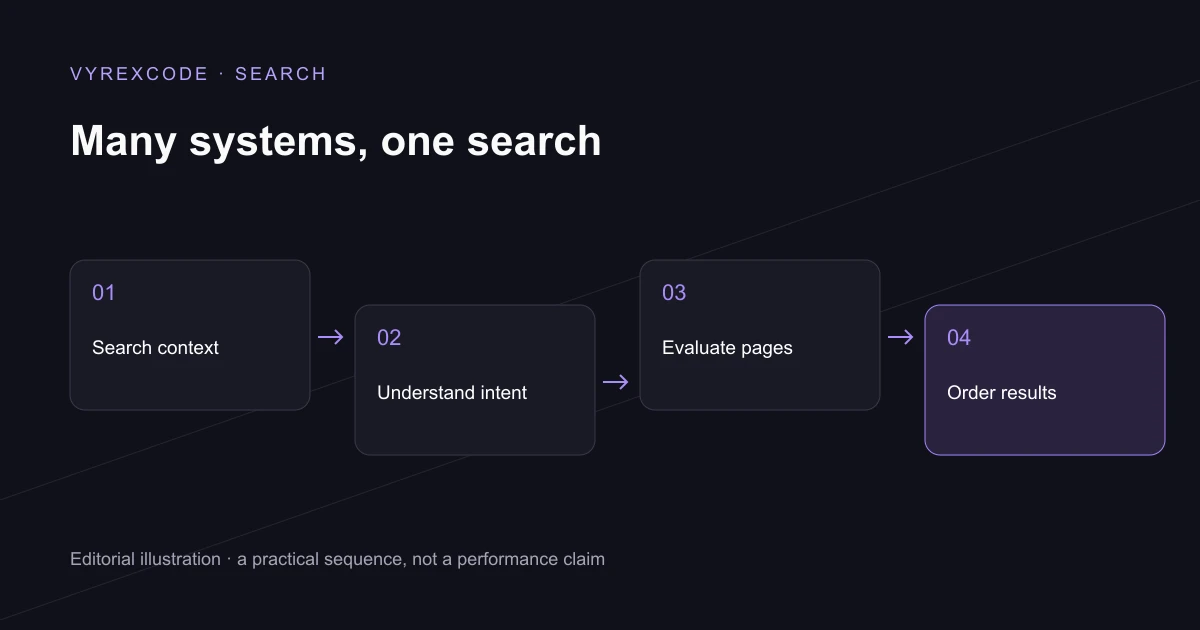
The Google algorithm is a common shorthand for the systems that select and order search results. Google describes multiple ranking systems and signals rather than one simple public formula. There is no official SEO score you can increase to purchase a particular organic position.
The Google algorithm considers relevance in the context of a search. The same page can perform differently for different questions because the reader needs a different answer. A service page, a product page and a definition guide are not interchangeable destinations.
Language understanding is part of how the Google algorithm matches information to a query. That is one reason natural explanations matter. Repeating an exact phrase mechanically is not a substitute for answering the subject clearly and covering the important practical distinctions.
What updates do and do not tell you
Changes to the Google algorithm can affect how results are evaluated, but a traffic decline alone does not identify a specific cause. Check whether an official update overlaps the dates, then also investigate technical releases, demand changes and the pages or queries involved.
An announced Google algorithm update does not prove that every affected site violated a policy. A ranking change and a manual action are different states. Read the relevant Search Console reports and official information rather than relying on a social post naming a supposed penalty.
When discussing the Google algorithm, use current official dates if the timing matters. An update that was still rolling out in an old research note may have finished since then. VyrexCode separates saved research from observations checked for the current review.
Build a site that answers its audience
You do not need access to the Google algorithm to improve a vague service page or repair a broken enquiry form. Those changes help the customer directly. A practical campaign begins with the website's actual problems instead of a theory about hidden signals.
Trying to manipulate the Google algorithm through keyword stuffing, hidden links or low-value page variants can create problems under Google's spam policies. Build useful pages with a real purpose and relevant connections. A technique being popular does not establish that it is compliant.
Reports about the Google algorithm should preserve uncertainty. VyrexCode records the page changes and compares search evidence over suitable periods, while allowing for outside factors. A chart moving after an edit is an observation that needs interpretation, rather than proof of a single cause.
If you want a practical plan rather than a promise to beat the Google algorithm, VyrexCode offers managed SEO services. We can review the pages, technical foundation and customer journey, then agree the work and the evidence used to assess progress.
Use a measured response to volatility
When performance moves, identify the affected page groups and compare complete periods. Read clicks, impressions and position together. A changing query mix can affect an average even when a valuable page remains stable for its main customer searches.
Avoid repeatedly rewriting the whole site in response to daily fluctuations. Fix a verified fault promptly, but keep a clear reason and release record for substantial changes. That preserves a usable baseline for the next review.
Put the advice into practice
For a small service site, prioritise the pages that explain the actual offer and convert suitable enquiries. Following every speculative ranking discussion can consume the time needed to fix a clear customer problem.
For a large catalogue, inspect page groups and shared templates when performance changes. A widespread implementation fault may have a clearer explanation than a theory about the subject of the latest update.
The practical ranking guide covers page-level work. It turns the general systems explanation into an inspection sequence without pretending that a checklist controls the search engine.
When citing an update, retain the official announcement and the observation date in the working record. Do not carry a rollout status from an old report into a new decision without checking it again.