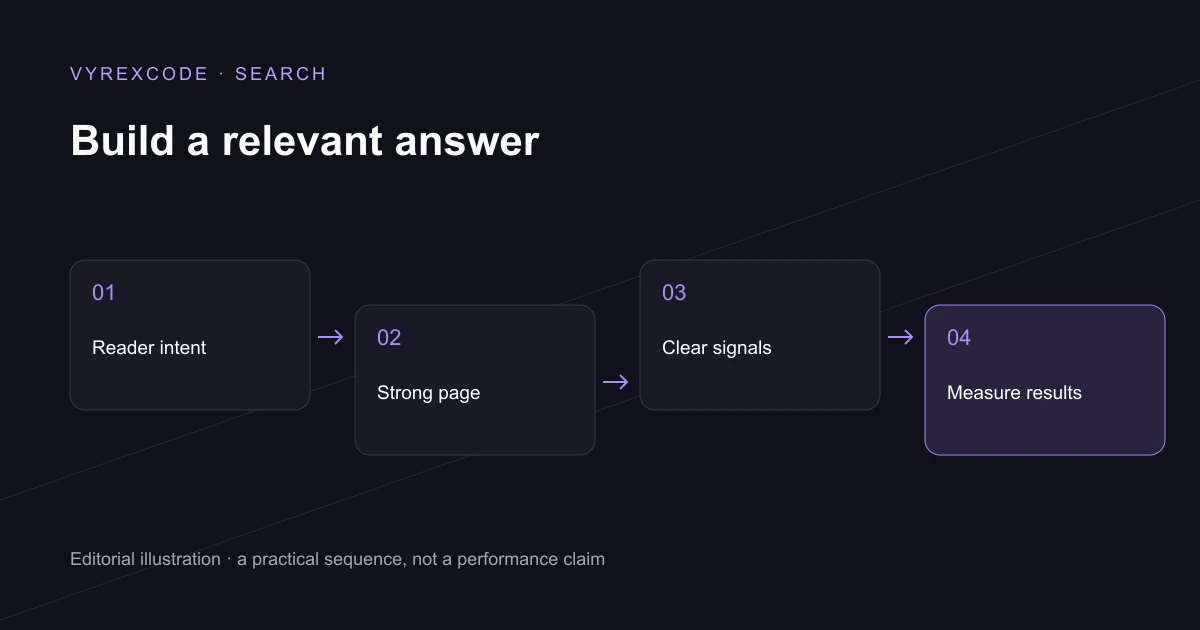
Give the search a useful destination
To rank on Google, a page needs to answer the searcher's actual question in a form they can use. Start by understanding the intent behind the query. A person comparing suppliers, looking for a definition and trying to fix a technical problem needs three different kinds of answer.
Choose one clear page to rank on Google for the commercial service you provide. Describe the offer, audience and next step accurately. Sending the same sales pitch through several near-identical URLs can leave readers with more pages but no better decision.
Before trying to rank on Google with a new article, inspect the existing site. A useful answer may already exist under another heading or route. Strengthening that page can be a better use of effort than creating a competing version.
Make the page understandable
A descriptive title helps explain what should rank on Google for the subject. Use a natural headline that matches the page, followed by the correct brand where appropriate. Do not promise a result the business cannot deliver merely to make the search listing sound stronger.
Useful headings help a reader work through the answer you want to rank on Google. Organise the sections around real decisions and questions. An original example, clear explanation or relevant illustration should add something beyond the same generic advice found on many other sites.
Internal links help the page you want to rank on Google fit into the wider website. A supporting guide can point towards the matching service when implementation becomes relevant. At VyrexCode, that means linking useful explanation to managed SEO services without turning every section into a sales pitch.
Remove obstacles and build evidence
You cannot reliably rank on Google with a page that the engine cannot access or consider for indexing. Check the response, canonical address and indexing instructions. A successful indexing observation still does not guarantee a particular position for a query.
Relevant references may help a useful page rank on Google, but links should have a genuine reason to exist. Publish something worth citing and approach appropriate publishers with that contribution. A large purchased link count does not establish relevance or a guaranteed ranking benefit.
Measure attempts to rank on Google through query and page performance over complete comparable periods. VyrexCode records the work alongside the search evidence so that the review has a clear starting point. An average position should be read with its query mix and search context.
If you want to rank on Google for services your business actually sells, VyrexCode can assess the current pages and prioritise the work. Bring the site, customer offer and existing search access. The useful output is a delivery plan with evidence, rather than a guaranteed position.
Maintain the answer after launch
Check the live page after every substantial release. Follow the enquiry journey, inspect the important links and verify that the public copy matches the intended version. A correct local draft does not prove the deployed page is correct.
Revisit the page when the service changes or customers repeatedly ask a question it does not answer. Keep genuine improvements separate from cosmetic rewrites performed only to make a publication date look recent.
Put the advice into practice
A page intended to rank on Google should name the actual service and explain its boundaries. That makes it easier for the right customer to recognise the offer and avoids attracting people looking for work the business does not provide.
The effort to rank on Google should continue through the enquiry journey. Test the action a visitor takes after reading, because a technically correct page can still waste demand if the next step fails.
Read the indexing explanation if the page is not being considered for search at all. That investigation comes before interpreting an average ranking position.
Keep the acceptance evidence for each revision. A saved page version, release date and checked destination give the next performance review a reliable starting point without assigning every outside movement to the edit.