What the term means
SEO means search engine optimisation. It is the work of helping search engines understand your pages and helping the right people choose them in organic results. You do not pay Google for each organic click, although creating, improving and maintaining the website still takes time and money.
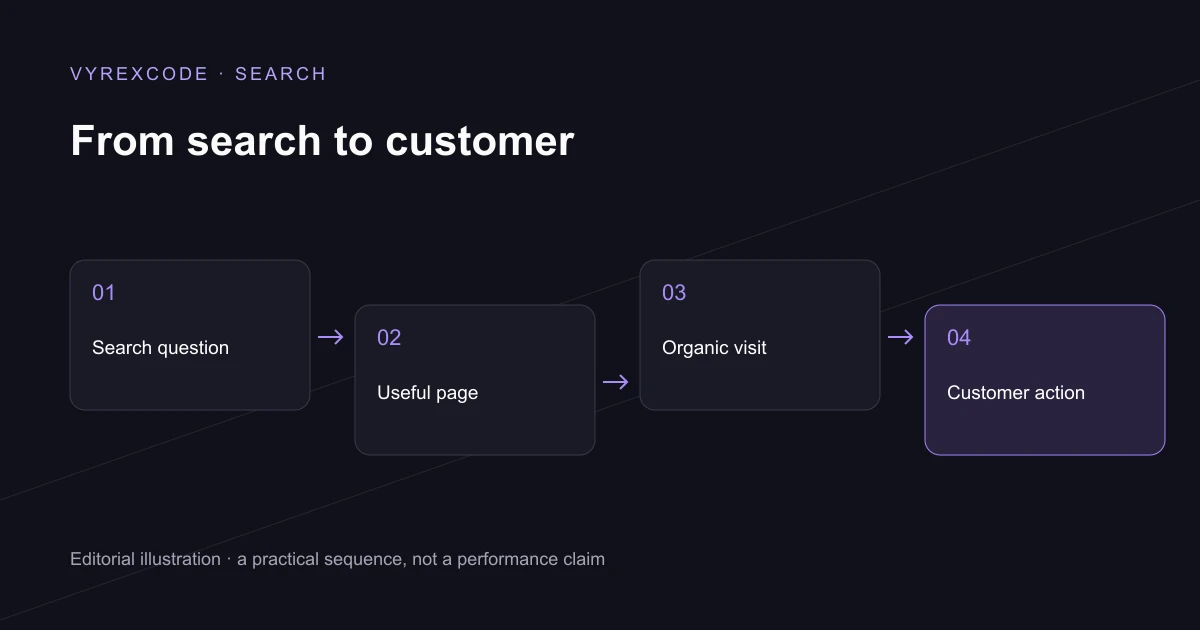
SEO starts with a useful page for a real reader question. If somebody needs a local accountant, a clear service page explaining the work, area and enquiry process is more helpful than a page repeating the phrase accountant many times. The words should describe something the business actually provides.
Technical SEO deals with how a search engine reaches and processes the site. Links, response codes, canonical addresses and indexing instructions affect which pages can be considered. These are foundations for discovery, rather than a guarantee that a page will rank first.
What people actually work on
Content SEO improves the substance and organisation of the answer. That can mean replacing vague sales copy with a service explanation, adding a genuine example or splitting unrelated subjects into separate pages. At VyrexCode, the point is to help a potential customer make a better decision.
On-page SEO includes descriptive titles, useful headings and contextual links. The search result should give somebody a fair idea of the destination. A dramatic headline that attracts the wrong visitor can increase clicks while doing nothing for the business.
Off-site SEO considers how other relevant websites refer people to yours. A backlink is a link from another site. A useful reference may send visitors and help discovery, but a paid placement does not buy a promised ranking position.
How the work connects to customers
SEO differs from advertising because an organic result is selected by the search engine rather than purchased as an ad slot. Both can contribute to a marketing plan. Neither removes the need for a good offer and a working landing page.
Local SEO helps explain a business's real location, service area and contact details. Consistent information matters because a customer needs to know whether you can serve them. Inventing offices or producing near-identical town pages is a poor replacement for a genuine local service.
Useful SEO reporting separates impressions, clicks and conversions. An impression records search visibility under the relevant report's counting rules. A click is an interaction leading to the site. A sale or enquiry needs separate measurement; VyrexCode does not treat those three numbers as interchangeable.
If you want somebody to handle SEO for your business, ask which pages they will work on and what evidence you will receive. VyrexCode's managed SEO services connect technical improvements, useful content and reporting. Start with the business outcome rather than a promised position.
What to expect from a sensible plan
There is no universal deadline for organic growth. Competition, the site's history, available demand and the changes required all affect progress. A supplier should be able to describe the work and review points without guaranteeing a number-one result.
A small business can begin by making its core services understandable, checking its contact journey and using Search Console to see how people find the site. Those steps provide a much firmer starting point than chasing every new search marketing phrase.
Put the advice into practice
SEO also includes maintaining accuracy as a business changes. If the offer, location or contact process changes, update the affected pages. Careful optimisation should help customers find current information, rather than preserve an old page simply because it once received visits.
A useful SEO starting point is one service page and its enquiry route. Read both as a new customer, then ask whether the page answers the questions that matter before contact. That gives SEO a practical purpose beyond an abstract visibility target.
Search results can include different formats, such as ordinary links, images and other features. The way a result appears affects how a person encounters the page, so compare like-for-like reports when assessing performance.
For the next measurement question, read what impressions mean. Understanding visibility before interpreting a traffic report makes it easier to ask a supplier useful questions.